TL;DR
What actually gets an HVAC contractor surfaced in Google's AI results?
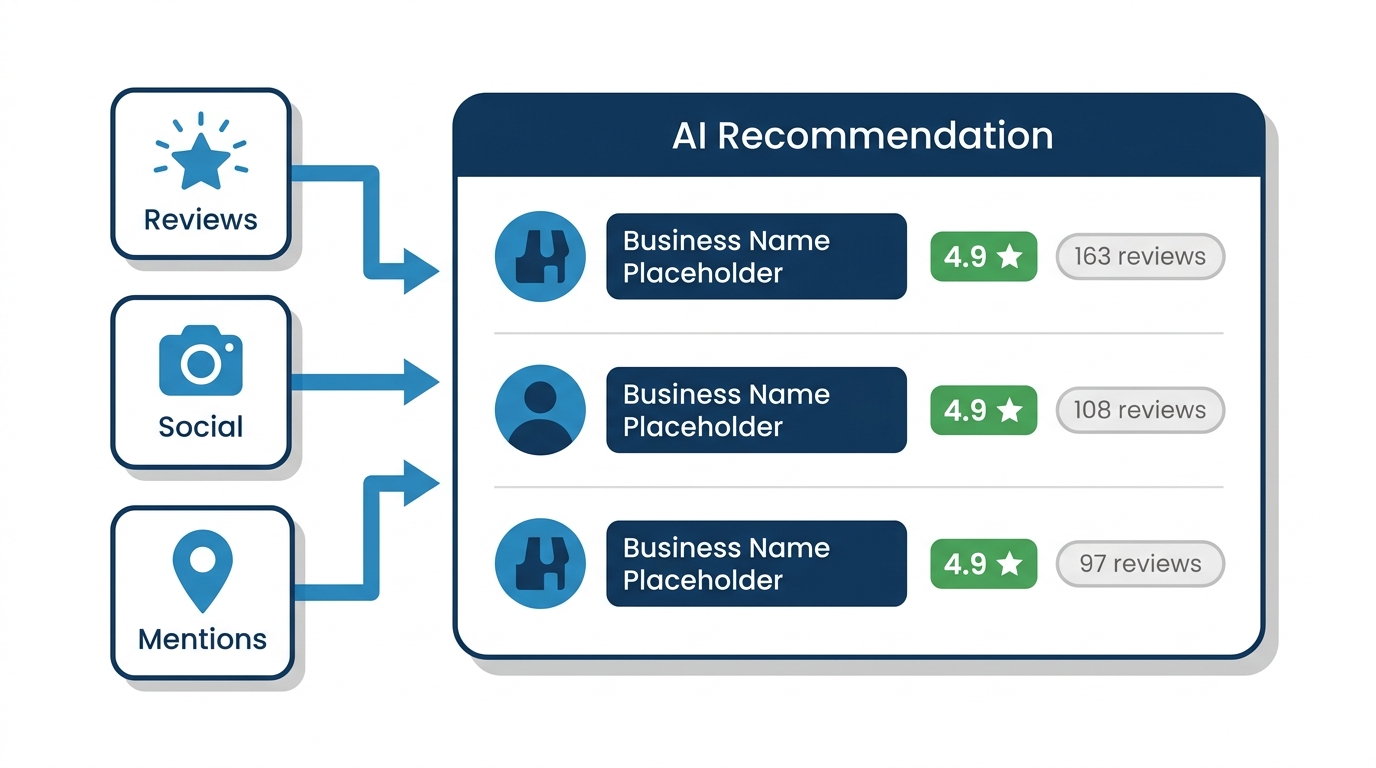
Google Business Profile strength: reviews, completeness, and consistent business data. The profiles Google's AI surfaces win on those signals — not blogs or website polish. The asset most agencies sell you is the wrong one; your profile is what the AI actually reads when it decides who to name.
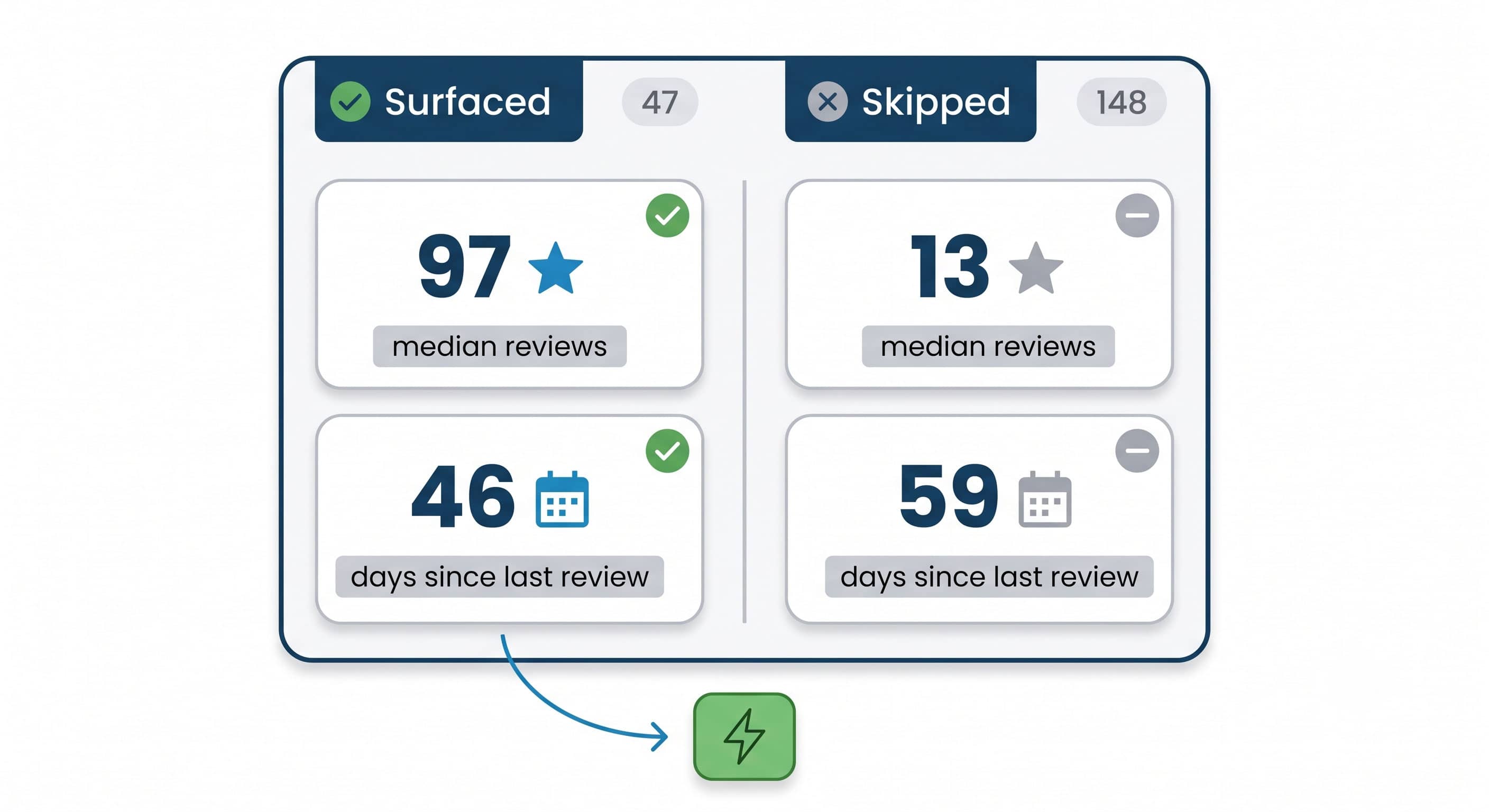
We audited 195 HVAC contractor profiles across 10 SGV and Southeast LA cities. Forty-seven made it into Google’s AI results. The other 148 are invisible to anyone who asks Google’s AI for help finding a contractor nearby.
You probably think your 4.9 stars is your edge. It isn’t — and we can prove it.
The difference between the ones that showed up and the ones that didn’t had nothing to do with blog posts.
What the audit actually found
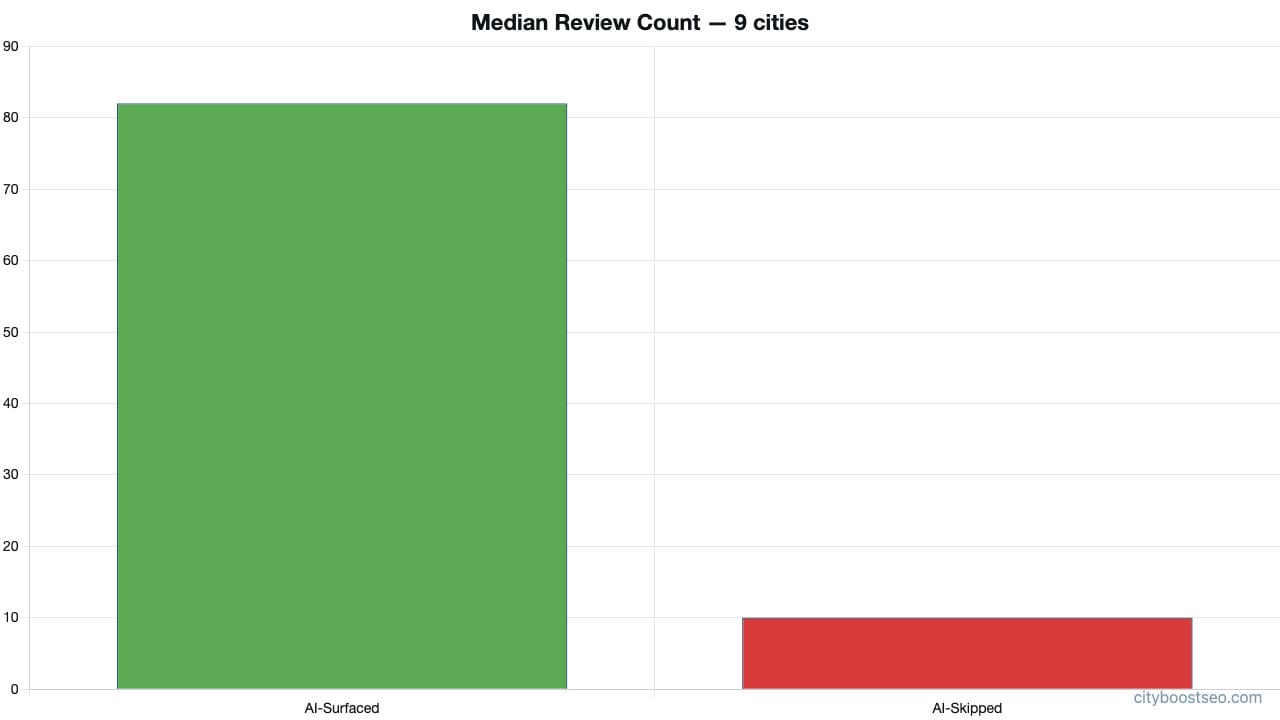
The profiles Google’s AI surfaced had a median of 97 reviews. The ones it skipped had a median of 13.
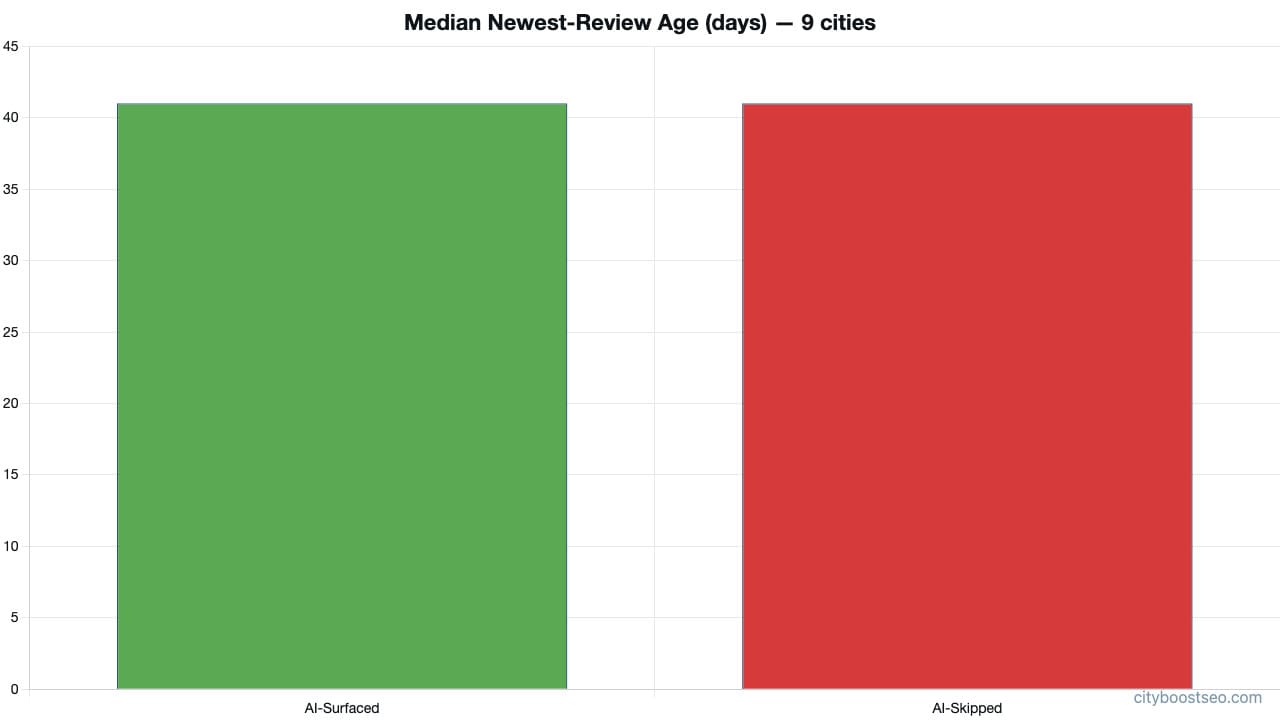
The surfaced profiles had their most recent review an average of 46 days ago. The skipped ones: 59 days ago.
That gap — 13 days in review recency — sounds small. It isn’t. When Google’s AI is deciding which HVAC contractor to hand a customer at 9pm in July, that 13-day gap is the difference between your phone ringing and your competitor’s.
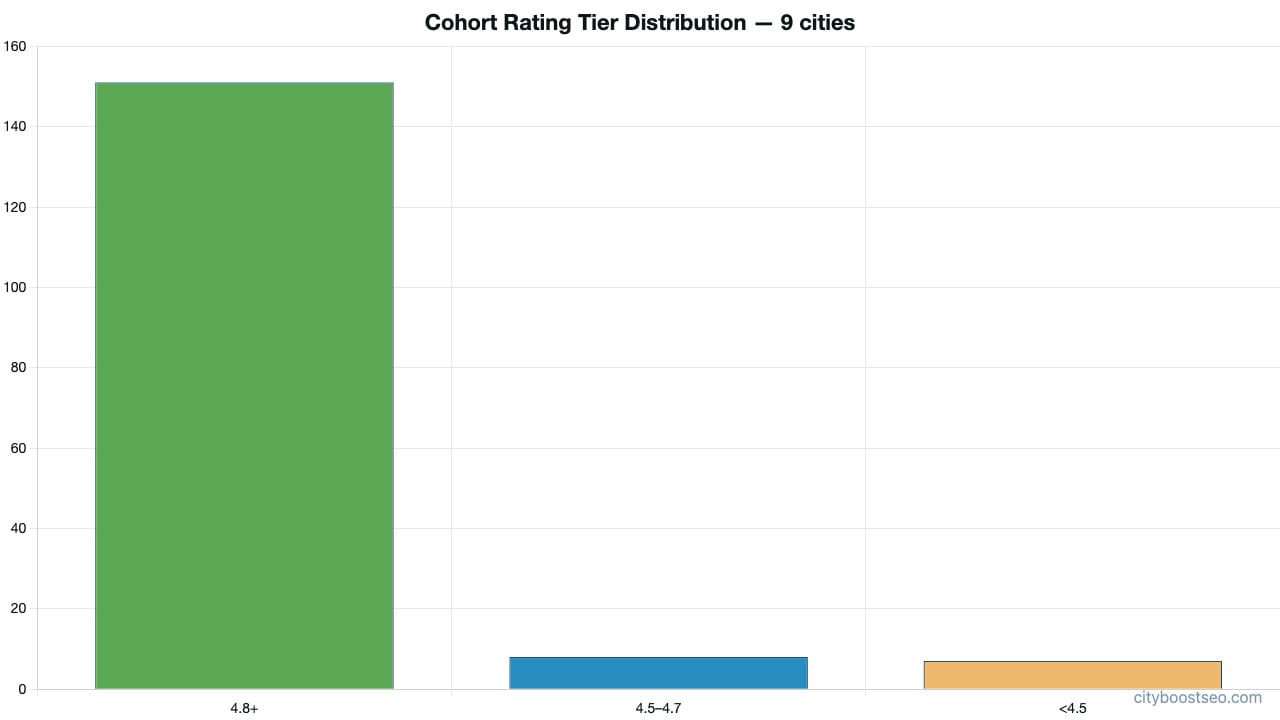
Here’s the proof: 173 out of 195 profiles we audited are rated 4.8 stars or higher. Only 7 profiles sit in the 4.5–4.7 range. Only 5 are below 4.5.
Rating alone stopped being a differentiator a long time ago. Nearly everyone has a good rating. What separates the surfaced profiles is volume and recency — not stars.
No blog post did that. No keyword-optimized article did that. Real customer activity did that.
The local picture is tighter than you think
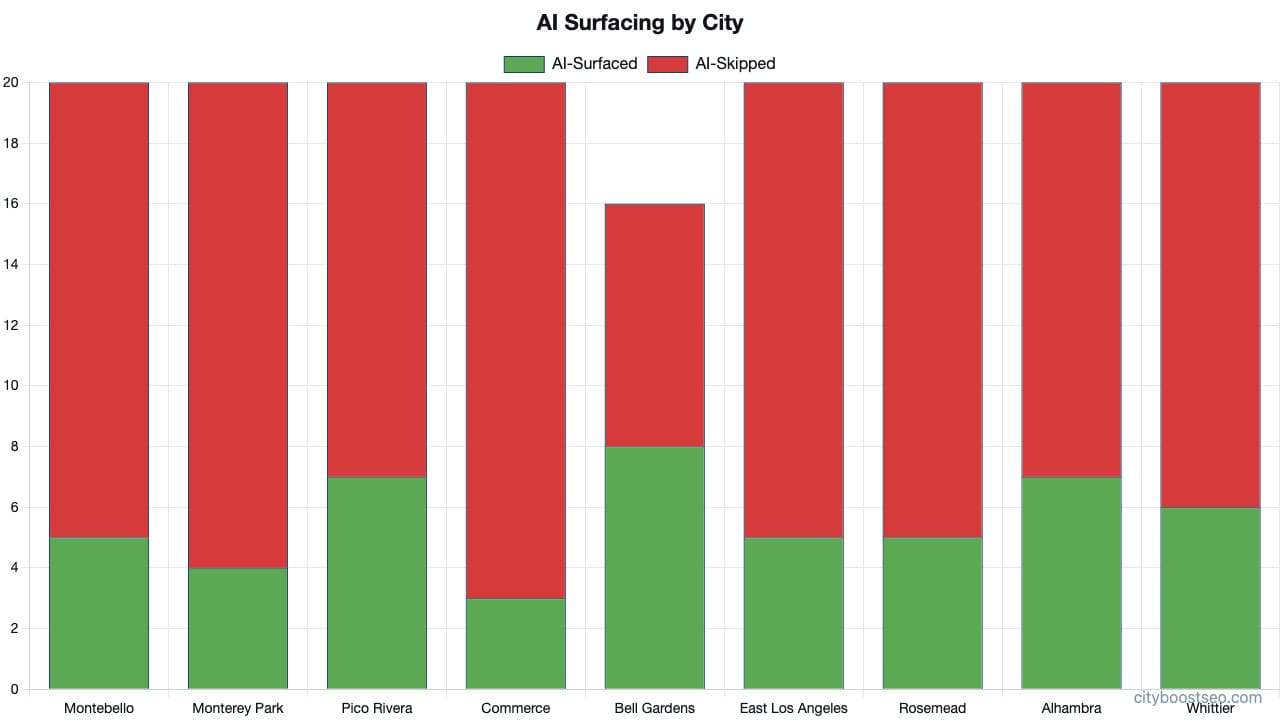
Across the 10 cities we audited — Montebello, Monterey Park, Pico Rivera, Commerce, Bell Gardens, East Los Angeles, Rosemead, Alhambra, Whittier, and Pasadena — the average cohort per city is 20 HVAC profiles competing for the same searches. But only 4–6 of those profiles get surfaced in any given city.
East Los Angeles is the tightest: just 2 out of 20 profiles made it into Google’s AI results. A 10% surface rate. If you serve East LA and you’re not one of those two, you don’t exist to a customer asking Google’s AI for help.
Pico Rivera, Whittier, and Pasadena each showed 6 out of 20 surfaced — the highest rate we saw. Still only 30%.
And here’s the part that matters for how you compete: many of the profiles that show up for a city search aren’t based in that city. A contractor headquartered in Alhambra can surface for a Rosemead search. A Pasadena-based company can pull results in Monterey Park. The boundary isn’t where your shop is — it’s whether your profile has the signals to earn the placement.
Take Montebello: 5 profiles surfaced out of a cohort of 20. Those 5 beat out 15 others — and some of those 15 are probably physically closer to the customer. Profile A, a typical surfaced profile based in Montebello, had 115 reviews with the newest coming in 46 days ago. Profile B, a typical skipped profile also based in Montebello, had 3 reviews with the newest 64 days old. Same city. Same trade. Completely different outcome.
That’s not a content problem. That’s a signals problem.
Most agencies sell you a blog. That’s the wrong asset.
“Content” for an HVAC contractor in the SGV is not a blog post titled “Top 10 Reasons to Service Your AC in Spring.” Nobody searches that. Nobody reads it. Google’s AI doesn’t weight it.
Real content, in this context, means:
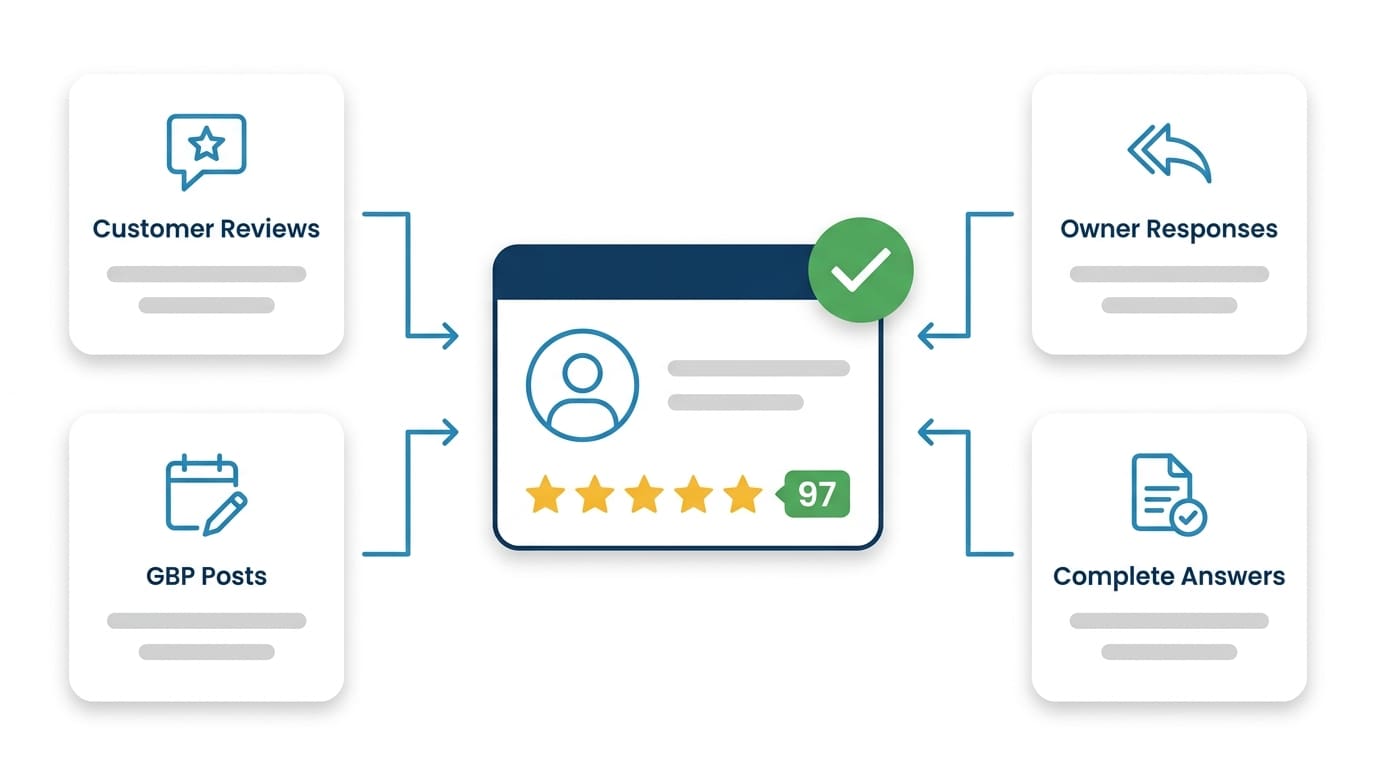
1. Reviews that describe specific work. A review that says “fixed my Carrier unit in Rosemead in 2 hours on a Saturday” is content. It tells Google what you do, where you do it, and that a real human trusted you. That review does more for your profile than any blog post.
2. Your own responses to those reviews. Short, specific, genuine responses. Not “Thank you for your kind words. We appreciate your business.” The skipped profiles in our audit were full of responses like that — templated, generic, and indexed as noise. Something like: “Glad we could get your Lennox system back up before the heat hit — those capacitor failures always seem to happen on the worst days.” That response is indexed. It’s real. It signals to Google that you’re an active, engaged business.
3. Google Business Profile posts about actual jobs or actual seasonal problems. Not marketing copy. “We’ve had a run of refrigerant leak calls in Whittier this week — if your AC is running but not cooling, that’s usually the first thing to check.” That’s useful. That’s the kind of thing someone shares or screenshots. That’s what Google’s AI reads when it’s deciding who to surface.
4. Answers to the questions customers actually ask. “Do you service mini-split systems?” “Do you offer same-day appointments?” “Do you work in Pico Rivera?” Google retired the GBP Q&A box in late 2025 — its AI now pulls answers from your website, your services list, and your review responses. Write them down where it can read them. Specifically.
None of this is a content treadmill. None of it requires a copywriter. It requires you to treat your Google Business Profile like the customer-facing asset it is — because it’s the most important page your business has.
The blog post question
Should you have a blog at all?
Yes — but not four posts a month. Not keyword-stuffed articles about “HVAC maintenance tips” that read like they were written by someone who has never seen a condenser coil.
One or two genuinely useful pieces a year can help. The test is simple: would a homeowner in Alhambra or Pasadena actually read this, or did you write it for a robot?
A post explaining why AC units in the SGV work harder than in coastal cities — because of the inland heat pocket and the difference between dry heat and ocean-moderated air — is useful and local. A post titled “5 Benefits of Regular HVAC Maintenance” is not useful and is not local. It could have been written for a contractor in Ohio.
Google’s AI is getting better at telling the difference.
Your customers already could.
The businesses that rank well in the SGV right now are not winning because they publish more. They’re winning because their profiles have more real signals: more reviews, more recent reviews, more specific responses, more complete answers. That’s the game. The blog is a footnote. Every month you spend on a blog package is a month your competitor is building the review cadence that actually moves the needle.
The one thing you can do Monday morning
Pull up your Google Business Profile and look at your last five reviews.
Did you respond to all of them? If not, do that first — today, not next week.
Then look at when the most recent review came in. If it was more than 30 days ago, you have a gap. The surfaced HVAC profiles in our audit had a median review age of 46 days. The skipped ones were at 59. That 13-day window is your target.
You don’t need a content strategy. You need a review cadence. Ask the last three customers you invoiced. Text them a direct link to your GBP review page. Do it this week.
That one move — done consistently — outperforms six months of blog posts.
The quick version is free: our Map Pack Grader scores your profile against the HVAC contractors winning the map pack in your city — reviews, rating, photos, and the gaps. If you want the full picture of where you stand against every competitor in your city, that’s exactly what our Local SEO audits surface. We run the same analysis we described here, specific to your city, your trade, and the profiles you’re actually losing jobs to.
How City Boost helps
We run profile audits for HVAC contractors and other home-service businesses across the SGV — the same methodology behind the 195-profile analysis in this post. Our Local SEO work identifies exactly where your profile is losing ground to competitors and what signals to build first. We tell you your review count, your recency gap, and which competitors in your city are ahead of you — and exactly what to do about it.